
The Concept: Connections
Better trail access and recreation by tying together what's already there.
The challenge and the opportunity
The Sawtooth Valley, despite its vast size, has relatively few moderate loops of manageable distance. Most single-track routes are either out-and-back, or they're enormous loops primarily accessed by dirt bikes — the only vehicles with the speed and endurance to reasonably ride them. Trails such as Germania, Grand Prize, Big Smoky, and Emma Creek are so long and challenging that they see relatively little traffic.
To be clear, many of us are dirt bike riders ourselves. The point is not that motorized use is a problem — it's that the length and difficulty of these routes effectively limits them to a single user group, while beautiful terrain that is "right there" goes largely unused by hikers and mountain bikers.
We see an opportunity to enhance recreation with minimal impact through connections: reopening abandoned trails, and in select cases establishing new single-track between existing routes. These connectors create shorter, more manageable loops for hikers, mountain bikers, and e-MTBs.
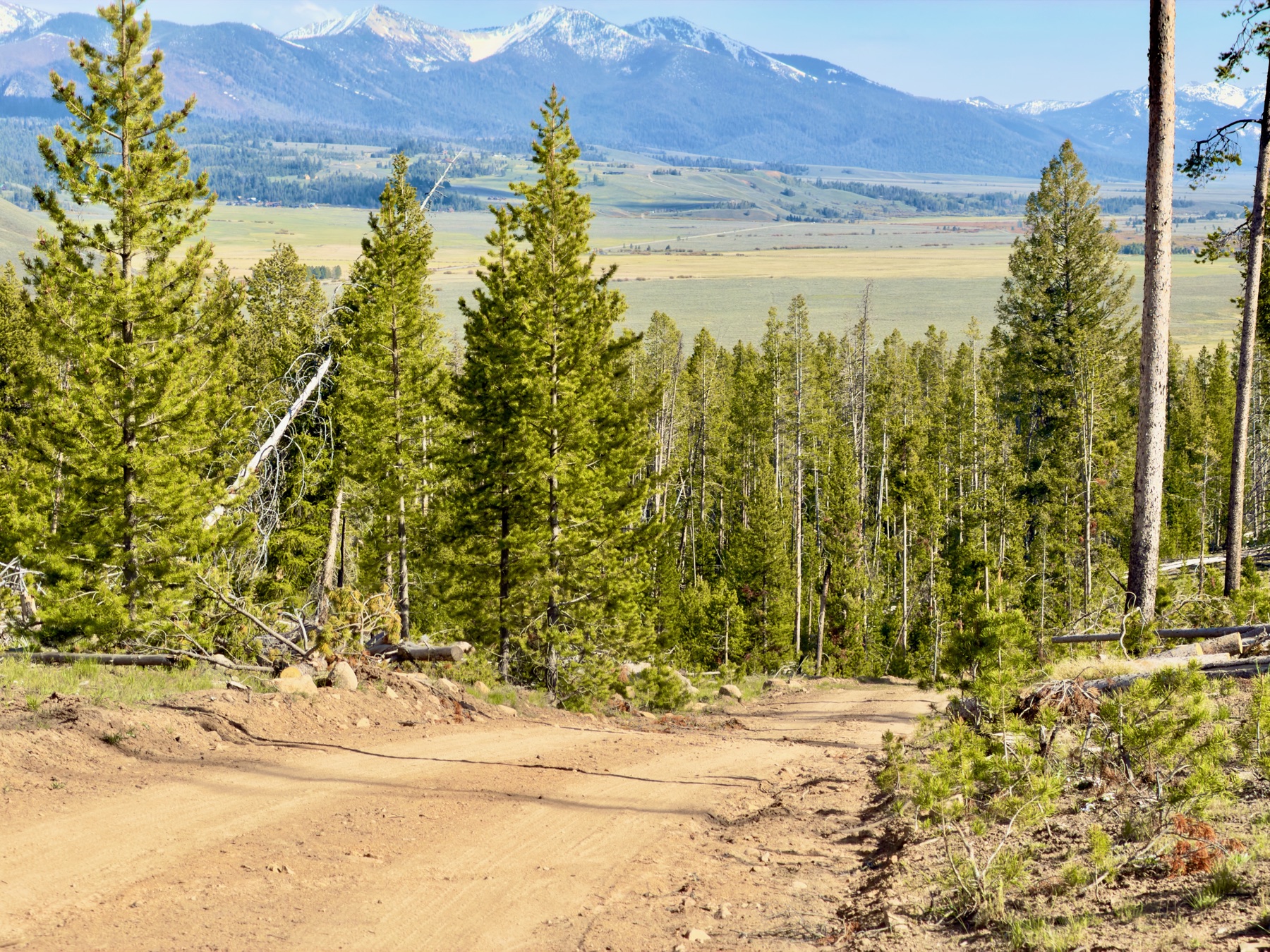
Trail types
Trail quality matters as much as location. Where possible, we propose to reopen existing trails for foot and bike use, including quiet pedal-assist e-bikes — no motorcycles, ATVs, or other motorized vehicles. Limiting these trails to foot and bike traffic lets them serve as connections while preserving the narrow tread character that makes them ideal for hiking and riding.
In addition to reopened connections, we propose a select group of new single-track trails — designed for places where existing alignments aren't viable, where exceptional trail terrain exists, or where a loop would otherwise force hikers and bikers onto a forest service road because no trail exists.
Trails vs. roads
Great trails aren't just about access — they're designed around the environment for scenery, aesthetics, and enjoyment. We don't see trails as simply a means to get somewhere, but a means to enjoy getting somewhere.
So we don't consider a single-track trail near a road duplicative. There's no comparison between riding or hiking a beautiful single-track and walking down a graded forest service road — people will use a road if they must, but will almost universally choose a trail. Keeping trails in proximity to roads also simplifies routing through riparian areas: trails and roads can share bridges and water crossings rather than duplicating the impact and expense of separate systems, while keeping vehicles and hikers/bikers safely apart.
Scope, plainly stated
This is not a large-scale, purpose-built trail complex or a stacked-loop destination system like Galena. It is a modest set of connectors — most of them trails that already existed — knitting the current network into usable loops. All conceptualized routes sit within a few miles of Highway 75, make essentially no new inroads into remote parts of the forest, avoid Wilderness completely, and stay away from private property and communities.
How we're thinking about impact